

I virtually met Chad Cornies years ago when I was helping manage the admin for a weekly radio show on Soho Radio, and we kept in touch. Over the years, I have written a few reviews of music that was sent to me; that said, over the summer I researched a little about the No Rules PR origin story and was fascinated by what I found, which prompted me to ask Chad for an interview. Happy Reading!
RMMW: I thought we would start our interview with the origin story of No Rules PR? And how it was created as a means to help your band and friends?
CC: No Rules PR started pretty organically. I was playing in bands and had spent years touring, putting out records, and being on the artist side of the music industry. Like a lot of independent musicians, we didn’t necessarily have the money to hire somebody every time we released something, so I started figuring out how to do publicity myself and helping friends with their records.
The real bridge between doing DIY publicity and learning how to do it professionally came during the pandemic. I suddenly had time, and I felt like I could do the work, but I also knew there was a big difference between promoting your own band and running a professional PR campaign.
I really respected the work Mavis Harris was doing with Nice Marmot PR, both as a musician and from watching her campaigns, so I reached out and basically asked if I could work for her for free and learn. She graciously took me on and gave me a shot.
My first album campaign with her was Dany Laj and the Looks’ Ten Easy Pieces in 2021. Apparently I didn’t screw it up too badly because she let me stick around! What started as me asking for a mentorship turned into working with her for about two years. That’s really where Mavis let me spread my wings and learn how to take all the instincts I’d developed as a musician and apply them in a professional capacity.
I deeply admire Mavis and her work ethic, and she was Canada’s Publicist of the Year three years running for a reason. I learned a huge amount from watching how she worked.
From there, No Rules PR grew naturally. Friends started recommending me to other bands, those bands recommended me to other people, and at some point I realized I had accidentally created a PR company.
That’s still a big part of the philosophy behind No Rules PR. I try to approach campaigns from the perspective of a musician rather than just a publicist. I know what it’s like to spend your own money on a record, pile into a van, play to twelve people somewhere, and hope somebody cares about what you’re doing. I never really set out with some grand entrepreneurial plan to build a PR agency. It grew out of trying to help my own bands and my friends get their music heard.
RMMW: I have always been a believer in the DIY mentality, especially when it is in favour of helping others; it really is quite remarkable when individuals in the industry take a chance on us, and how their belief allows for a new cohort of professionals to emerge and bloom on their own. It is something that is truly worth its weight in gold, and something that tends to pay its way forward. You shared in your previous answer that you did not screw up too badly on your first campaign; that said, what do you think are the main attributes that could easily be overlooked in a PR campaign that are essential pieces to communicate to individuals you are pitching to?
CC: I think one of the biggest things people overlook is that the music itself is only part of the pitch. Obviously the record has to be good, but journalists get sent an unbelievable amount of good music. You have to give them a reason to care about this particular record.
That can be the story behind the band, where they come from, who they’ve worked with, an unusual recording process, touring history, something happening in their community, or even one really interesting detail about a song. Sometimes the little detail you almost leave out ends up being the thing that gets somebody interested.
The other big one is knowing who you’re talking to. Sending 1,000 identical emails isn’t necessarily better than sending the right email to the right person. A huge part of PR is understanding what an individual writer, DJ, or outlet actually covers and giving them something relevant.
RMMW: You know what, I think it is equally important to acknowledge all the little nuances that make a band, too. I can be a little pedantic about it, I need to know all the little details, which is why, although I know others would prefer pluggers cut to the chase, I absorb every single detail that is given to me. My mind is set more on the personalisation; don’t get me wrong, understanding an artist’s inspiration and songwriting methodology is important, but what is equally important for me is to understand identity and intention. Hmmm, speaking of band knowledge, as you mentioned previously, your first professional PR campaign was for Dany Laj and the Looks; how did it feel to organise something yourself for them?
CC: Dany Laj and the Looks, are a great power-pop band from Montreal. I worked on their Ten Easy Pieces album in 2021 while I was learning the ropes with Mavis Harris at Nice Marmot PR.
I’d approached Mavis during the pandemic and asked if I could basically apprentice under her for free. I had years of experience promoting my own music and touring, and I felt confident I could do the work, but I didn’t know how a professional publicist actually structured and ran a campaign. I wanted to learn from somebody who did.
So Dany Laj was really the first time I got to take everything I’d learned from years of being in bands and apply it within a proper PR campaign. It was exciting and probably a little terrifying. When you start seeing responses and coverage come in, there’s this little realization that maybe you’re actually good at it.
Thankfully, Mavis kept letting me come back! I ended up working with her for about two years, and she gradually gave me more freedom to spread my wings. That experience gave me the confidence and professional foundation to eventually build No Rules PR.
RMMW: I don’t know if you are familiar; in the realm of counselling, we always say that a little fear and terror is good, as it is a perceived motivator. It must have been equally exhilarating to fill in the pieces of what you learned independently with a professional narrative and understanding of essential PR components. Which makes me intrigued; entrepreneurial ventures are sometimes one of the most difficult to pursue. Having established No Rules PR, is there anything that you would have done differently? And if yes, what is it?
CC: Absolutely. I think I would have treated it like a business earlier.
No Rules PR grew very organically, which was great in a lot of ways, but that also meant I was figuring out systems, pricing, databases, scheduling, and workload as I went. When something starts with helping friends and learning the business through mentorship and gradually turns into a real company, you don’t necessarily stop one day and design all the infrastructure you would have built if you’d started with a formal business plan.
I probably would have standardized things earlier and been more protective of my time.
At the same time, I wouldn’t change the way I actually learned PR. Having Mavis Harris take me on at Nice Marmot was invaluable. I knew the musician side of the business, but she showed me what doing the job professionally actually looked like. There’s no business plan or online course that could have replaced those couple of years of actually doing campaigns alongside somebody whose work ethic I really admired.
So I’d change some things about how I built the business, but I wouldn’t change how I learned the craft.
RMMW: I am such an advocate for trial by fire, which allows you to learn on your feet in a way that fortifies a pre-existing work ethic that knows no bounds. Since starting to work in the music industry six years ago, there are times when I still feel like I know nothing, basically a newborn baby absorbing knowledge via my Music Business classes. Which brings me to my next question: I read in your Vancouver Guardian interview where you classified yourself as a newbie in the realm of PR. Do you still feel that way?
CC: Not really, although I probably still have some of that mentality.
When I first started, I absolutely was a newbie. That’s actually why I approached Mavis Harris at Nice Marmot PR in the first place. I knew the music industry from years of playing in bands and touring, but I was self-aware enough to know that didn’t automatically make me a professional publicist. I wanted somebody to show me how the job was actually done.
Since then I’ve run a lot of campaigns, built relationships with media around the world, developed a pretty enormous database, and learned an unbelievable amount through both mentorship and trial and error. So no, I don’t think I could reasonably call myself a newbie anymore.
But I still sometimes feel like the musician who somehow stumbled into running a PR company, and I actually think that’s probably healthy. I don’t ever want to reach the point where I think I’ve figured out the music industry. The minute you do, something changes. Outlets disappear, algorithms change, journalists move, audiences change, and something that worked two years ago suddenly doesn’t.
So I’m much more confident in what I do now, but I try to keep some of that newbie curiosity.
RMMW: Newbie curiosity will take you to a lot of places; curiosity in general, I believe, makes us stronger as humans. As a wife and mother of three, I can attest that managing work-life balance at times as a parent can be absolutely bonkers, especially in an industry that does not sleep. How do you turn off from work at the end of the day?
CC: I’m terrible at switching off. That’s probably the truthful answer.
The music industry doesn’t really have business hours, and when you’re running your own business there’s always another email you could answer, another pitch you could send, or something you could be working on.
I’ve found that I almost have to physically remove myself from work. We take a lot of trips and holidays as a family, and sleepovers at the grandparents are great because they create these little forced breaks where I can actually be present instead of thinking, “I’ll just answer these three emails.”
I’m definitely still figuring it out. I don’t think I’ve achieved some magical work-life balance. Sometimes you just need to go somewhere where opening the laptop isn’t an option.
RMMW: You know it can be quite a lot, I have had similar experiences, there are times when I have had business meetings at 3:00am on a Saturday night as a client needed something from me. It at times can be quite difficult to separate and just leave the laptop at home. As of late, I have been literally turning my phone off. I miss the days of letters and answering machines that did not require the immediacy of a response, which this world has tethered us to. Since PR is not how you started in the Music Industry, can you please share what you did prior to running your agency?
CC: I came to PR through being a musician. I’ve spent years playing in bands, releasing records, and touring, so my first experience with publicity was really from the artist’s side of the equation.
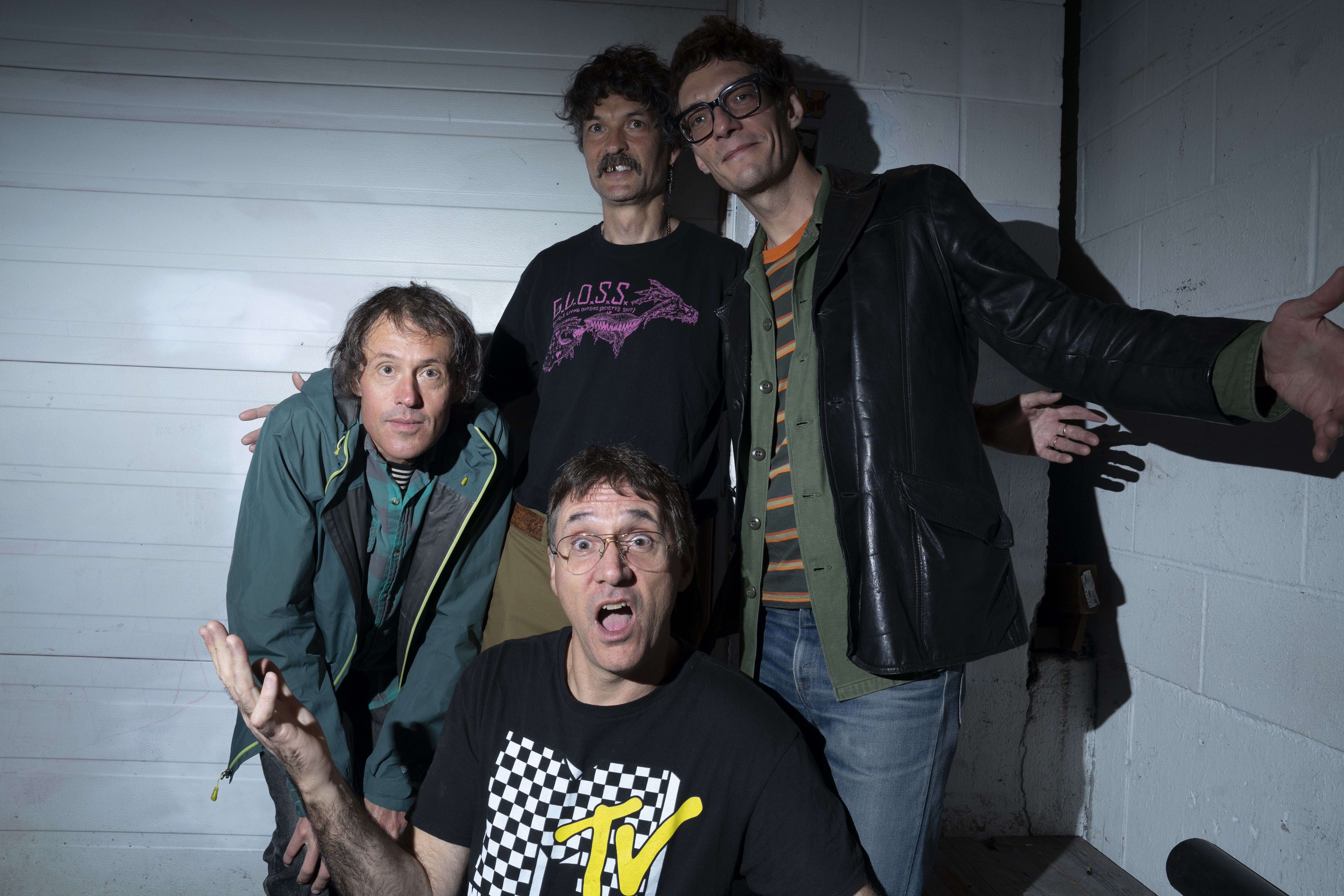
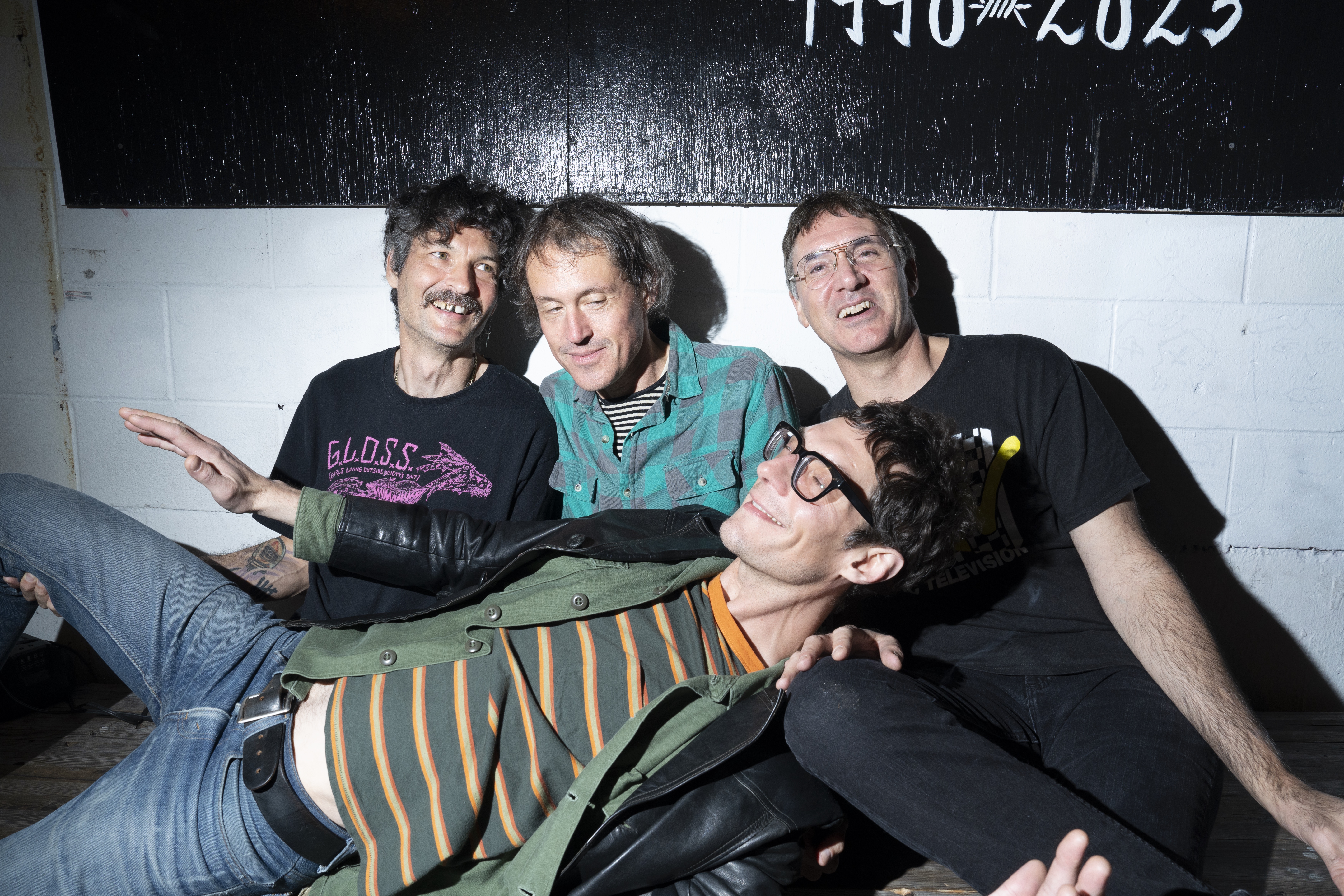
I’ve been lucky enough to play in a lot of bands over the years. I was briefly in the Black Halos and did a number of tours with them, spent many years with the Spitfires and made four albums with them, played with Dysnea Boys while I was living in Berlin, and briefly played with the Loyalties in London. My current band, Autogramm, has toured Europe three times along with countless trips up and down the West Coast.
So I’ve spent a lot of time in vans, clubs, DIY spaces, and all the weird places you end up when you’re in a touring band.
That experience has probably shaped No Rules PR more than anything else. I know what it’s like to put a huge amount of time, money, and emotional energy into making a record and then wonder how you’re actually going to get anyone to hear it. I also know what it’s like to be the artist waiting for an email from a publicist and hoping something good happened.
So when I started doing PR for other artists, I wasn’t really approaching it from a traditional agency background. I was approaching it as a musician who had spent years learning how this world works from the other side.
RMMW: I think part of the success you have received with No Rules PR was the fact that you did not take the path of a conventional PR firm; your shaped experience grounded your empathy to approach PR from another narrative, one that brought your entire history with it. You basically created something that you would have wanted via everything that you have done with bands and touring. Now, since AI has taken over most conversations, I thought I’d ask: with the inception of AI, how do you think, if at all, it will change the impact of how music pitches are prepared in the future?
CC: I think AI is going to be useful, but there’s also a real danger that it makes music PR worse.
It’s already incredibly easy to send generic pitches to thousands of people. AI makes it even easier. So I think journalists are going to get even better at recognizing something that feels mass-produced or impersonal.
Where AI is useful is behind the scenes. It can help organize information, work through large databases, brainstorm, research, edit copy, or help identify things you might have missed. I use AI in my own work, but I don’t think you can outsource taste or relationships to it.
If everybody has access to the same technology, the human part actually becomes more valuable. Knowing why a particular writer might care about a particular band, having a relationship with that person, and understanding the culture around the music are things that are much harder to automate.
RMMW: You are right with that you said, “but I don’t think you can outsource taste or relationships to it.” I have been so engaged in conversations about AI; it has led me down too many rabbit holes. A human touch may be able undergo a mimicking process, in relation to research however the manner of truly liking something and understanding how subjective tastes with music can be makes it extra special, that AI will never comprehend the feeling of driving at 3:00am listening to a song loud on a deserted road, or the sorrow certain songs bring, even the joy of being grateful for stupid human things that go underappreciated each day. Apologies for the Hallmark rant; back to PR: what is your favourite thing about having No Rules PR?
CC: Probably getting to work with music I genuinely like and then seeing something happen because of the work we did.
There’s a great feeling when you’re working with a smaller artist and suddenly a publication they’ve read for years writes about their record, or a radio station starts playing them. I’ve been the musician on the other side of that email, so I know how much those little victories can mean.
I also love that No Rules PR has introduced me to musicians and music-industry people all over the world. It keeps me connected to music in a way that I don’t think I would have otherwise.
RMMW: The music industry ecosystem is one of the most wondrous things I have ever experienced. That must be a hell of a feeling, working with a smaller artist and then watching their exposure grow. (Indie all the way!) Do you have any advice you would offer individuals wanting to follow the same PR path you did? Would you encourage them or tell them to run screaming in the other direction?
CC: I’d encourage them, but I’d probably encourage them while screaming a little bit.
You have to genuinely like music and people, because there are easier ways to make money. You also need to be comfortable hearing nothing. A huge percentage of PR is sending something you believe in to somebody and never getting a response.
I’d also tell people not to wait until they feel qualified, but at the same time, find people you respect and learn from them. That’s what I did with Mavis. I certainly didn’t have some master plan or traditional PR credentials when I started. I basically went to somebody whose work I admired and said, “I’ll work for free. Teach me.”
Start small. Help a friend’s band. Learn how journalists want to be contacted. Keep good records. Don’t spam people. Pay attention to what works and what doesn’t. And if you get the opportunity to learn from somebody who’s really good at what they do, shut up and pay attention.
Most importantly, don’t promise artists things you can’t control. You can promise to work hard and run a good campaign. You can’t promise Pitchfork.
RMMW: “Shut up and pay attention.” That is some solid advice right there. Arrogance will never serve in that opportunity; it is essential to be quiet to learn. If one is not engaged in active listening while spending an exorbitant amount of time learning a craft, they are not only wasting their time but also the time of the person who is helping navigate a convoluted maze of knowledge. The realm of PR requires, at times, both macro and micro applications; have you kept to the same micro-scale model in your original PR blueprint?
CC: Yes and no.
The basic philosophy is still there. I don’t want No Rules PR to become some enormous agency where artists feel like an account number. Being small lets us be selective about what we work on and actually know the records we’re pitching.
But the business has definitely grown beyond the original version. I’ve brought other people into the operation, expanded the database and international reach, and built much more structure around campaigns. The challenge now is figuring out how to grow without losing the thing that made the small model work in the first place.
For me, growth isn’t necessarily about having hundreds of clients. It’s about being able to run more effective campaigns, build better systems, and work with good people while keeping that personal relationship with the artists.
RMMW: So many people already feel like they are a number; for an artist to feel that way would truly eviscerate their soul, especially with music output regardless of genre. Personality, in my opinion, is the key; especially when it comes to something like word of mouth, which can be a very tricky endeavour to make a living. How have you been able to sustain No Rules PR?
CC: Ironically, word of mouth has probably been one of the strongest things about the business.
A lot of clients come through other bands, labels, journalists, or people I’ve worked with recommending me. In music, I think that carries more weight than an advertisement saying “hire this publicist.” If somebody had a good experience and tells another band about it, there’s already a level of trust before we’ve even spoken.
The other part is repeat business. I don’t want to run one campaign for somebody and never hear from them again. Some of the most rewarding relationships are artists who come back for the next single, the next record, or the next project.
I’ve never really wanted No Rules PR to grow through aggressive sales. I’d rather do good work, build relationships, and have that lead naturally to the next project. It’s slower, but I think it’s also why the business has been sustainable.
RMMW: That level of aggression is something that has no business in any environment; it can hinder more than be of aid. The inertia of longevity within the domain of synergy is such a remarkable thing. I’ve never been a one-and-done person; in fact, it kind of bothers me a little bit. I know individuals tend to think they will be judged for their actions; having clients you grow with helps keep the relationship in a space with the possibility of comfort and growth, as they know how you operate and vice versa. And now for the silly question of our interview if you had a superpower, what would it be?
CC: Apparently I already have the ability to keep 10,000 email addresses, campaign details, release dates, radio stations, and journalists in my head. So for my actual superpower, I’d just like to be able to remember everyone’s birthday. That would be extremely helpful.
RMMW: You know that response makes me laugh, only because for some reason I have always been able to remember birthdays, well and song lyrics. Thank you so much for this interview, Chad, and for genuinely taking the time to offer thoughtful and detailed responses.




Leave a Reply