
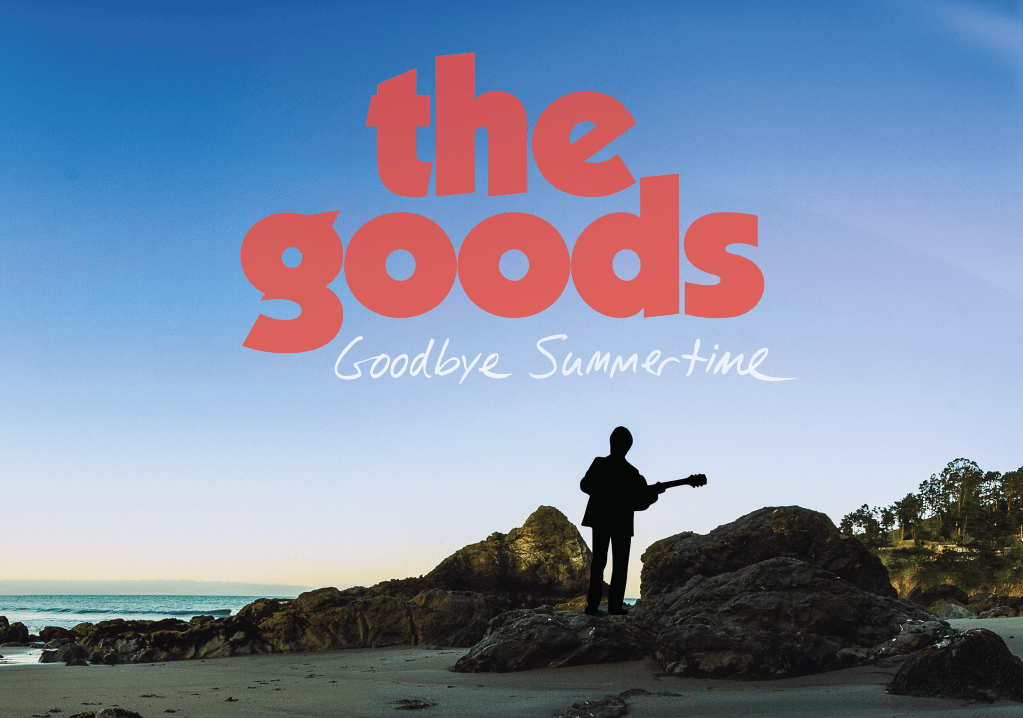
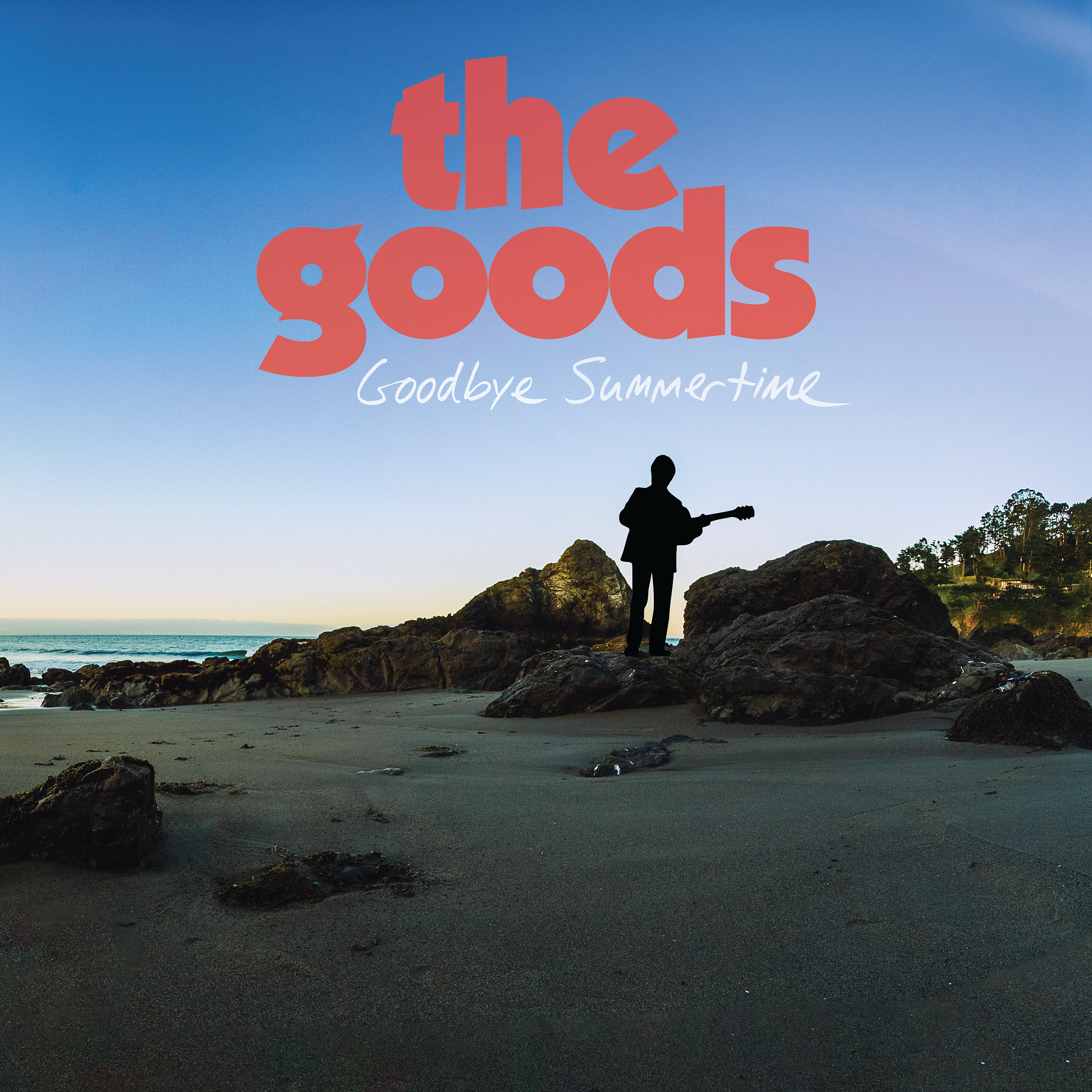
I think one of my favourite things about interviewing artists is that I am able to acquire a bird’s-eye view of not only their writing process but also a human dialogue. Today, I had the good fortune of interviewing Oakland’s The Goods. I thought that it would be fun to release this interview on the last official weekend of the summer holiday prior to life resuming. When I first heard Summer’s Almost Gone, I thought it to be the most perfect song, with emotions and lyrics that are not from this technologically advanced world. This was the track that prompted my desire for an interview. And, happy release day Goodbye Summertime.
RMMW: What do you want listeners to take away from Goodbye Summertime that is different from what they took away from your previous full-length album, Don’t Spoil the Fun?
RG: Hopefully if someone liked the previous record, they’ll like this one as well. Don’t Spoil the Fun was very direct, very focused on a specific sound, while Goodbye Summertime goes a lot of different places. I hope that there are a couple of surprises on there that people may not have expected from us. But at its core still a record of catchy pop songs.
RMMW: I know from a lover of music, I genuinely appreciate it when artists veer into a different direction than previous work; it keeps things interesting. One thing that I have come to appreciate as a writer, is having a MASSIVE cup of tea prior to writing any books; do you have any writing rituals you follow before starting a new song?
RG: I just try to write as often as possible. I always have a bunch of song ideas floating around at any given time, and every now and again I revisit one, and it catches fire, and I’m able to finish it. I find that songwriting has as much to do with persistence as it does with inspiration.


RMMW: You are right, the level of persistence required to write a song can try the patience of a saint. What is the main way you write your songs, for example, with pen and paper or digitally?
RG: These days it’s usually in a notes app on my phone, because lyric ideas will strike me at odd times while I’m out and about.
RMMW: The convenience of our modern-day tools has allowed us to take portability to an all-new level, especially with regard to creativity. We all have an ugly inner critic. How do you contend with yours?
RG: Ha, good question – it’s difficult. That voice can be pretty overwhelming at times. I think the key for me is just to enjoy the process. Writing and recording music is a lot of work, but when it clicks, it’s incredibly fun and fulfilling. You also have to give yourself permission to write bad songs – loads and loads of bad songs. Don’t be afraid of writing a hundred bad songs to get to the one good one.
RMMW: It is always with the bad ones that the solid songs are appreciated; do you have a favourite song from Goodbye Summertime that you’re especially excited for your listeners to hear? If so, which one, and why?
RG: My personal favourite is the album closer “Sleepytime.” It sort of encapsulates everything I wanted to do with the record from a musical, lyrical, and production perspective.
RMMW: Oooh, I cannot wait to listen to it when the LP is released on September 16, 2026. Now, I would like to focus on genre for a moment; how do you push the boundaries of power pop within your music and bring the genre into our contemporary world, while still drawing from the sound established in the 1970s?
RG: I really try not to think of the band as a “power pop” band per se, even though I understand that’s the genre that best describes what we do. I’m just searching for sounds, arrangements, and chord progressions that are interesting to me. It happens that I draw a lot of influence from the 60s and 70s, but I’m not trying to “be” anything in particular. It’s sincere music, and hopefully that sincerity keeps it from feeling like a total retread of past sounds.
RMMW: I cannot express right now how much I LOVE your answer; I appreciate that you will not box yourself in and play with the sounds of the music you want to create. Speaking of music, which comes first: the music or the lyrics?
RG: They often come at the same time. If one happens to come first, it’s typically the music, but there’s always an idea of a vocal melody and some words to go with it, even if those words are total nonsense. But somewhere in those nonsense words there’s typically a kernel of an idea that finds its way into the final lyric. I take a step back and ask myself, “what am I singing about here?” and the answer to that question becomes the song.
RMMW: I think this is one of my favourite questions because I never know what kind of response I will receive. I relish how you are able to find something in nonsensical words that, when reset, make a final lyric. Now, a little bit of heavy, since this new record was written during a period of dramatic personal change, how has the dynamic or chemistry within the band evolved?
TG: During the making of this album in particular, I was basically living at my recording studio, holed up there alone, feverishly writing and recording songs, so I handled more of the performances on this record myself than on previous releases. That’s not to say there aren’t important contributions from others – Cherron Arens (the only other consistent member of the band) played bass on several key tracks, and Yea-Ming Chen and Ian McBrayer from my other band Ryli lent their respective talents to several songs as well. But overall, this record is a product of me exploring sounds and feelings alone in the studio.
RMMW: I know that feeling so well. When I am writing my books, I basically lock myself into my office. There is something about the solitude of being able to create in peace. Now, if you could have any superpower, what would it be?
TG: It would be great not to have to eat – how annoying is it to have to find food 3 or 4 times a day?
RMMW: That is one that I have never received, and yes, I agree with you on that one!




Leave a Reply