

I have to admit, interviewing songwriters is always an incredible experience for me, as every one of them has such a unique identity and origin. One of my favourite things that I have said ad nauseam is to comprehend the intention of what comprises a songwriter’s identity and how it is that they can create such inspirational bodies of work. It is a serious endeavour that requires not only technique but also careful consideration of word placement and comprehension as to the best juxtaposition for the thematic natures of songs. This interview explores what inspires Cosima Suzanne and how the nature of her craft has evolved to what it is.
Happy Reading!

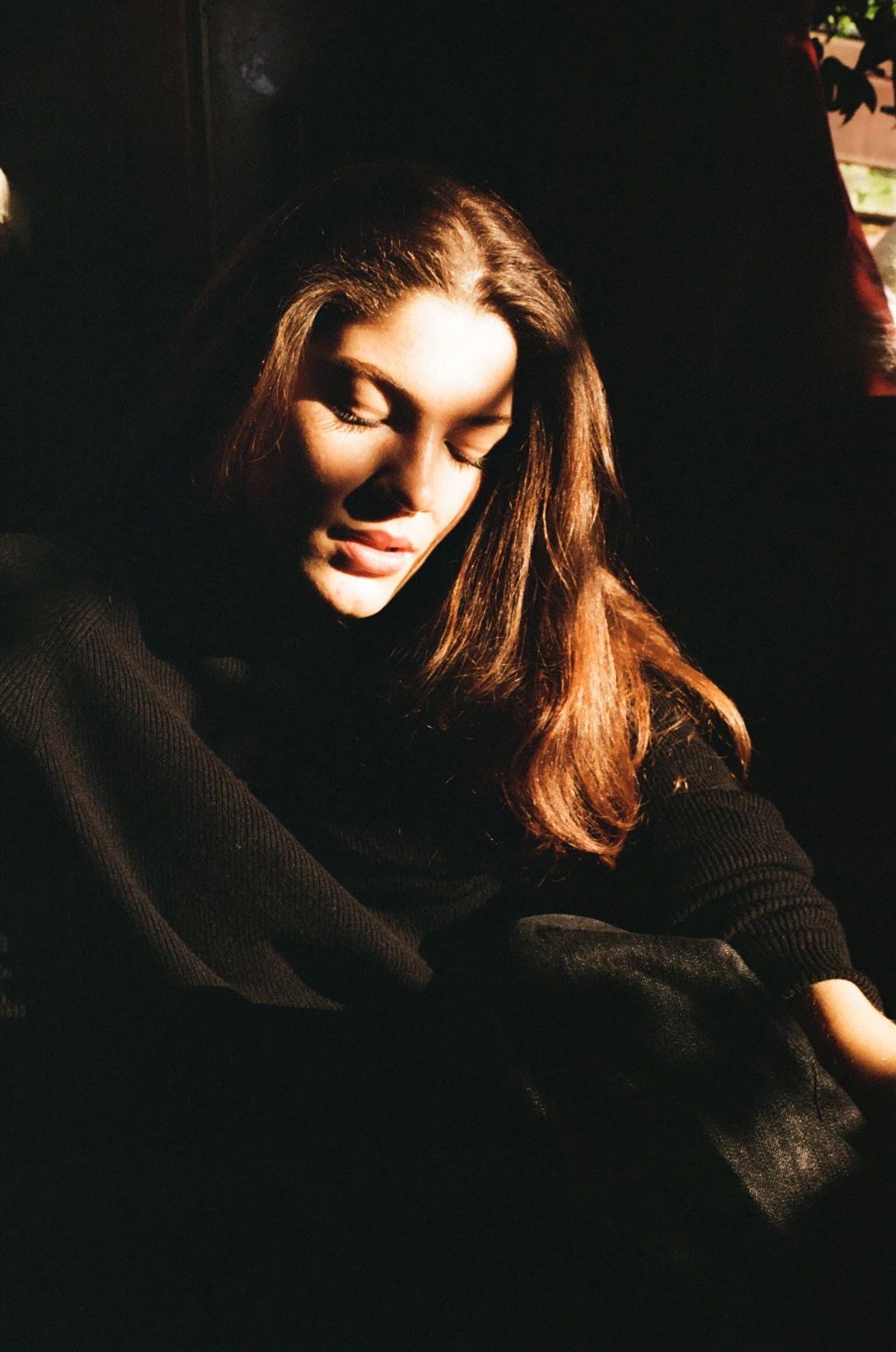
RMMW: Hi Cosima Suzanne, thank you so much for taking part in my Femme Fatale series. Now, let’s get started; do you have a favourite time of day or place to write/compose music?
CS: I’ve written at all hours of the day, but I think the most exciting stuff often happens at night. Though I sometimes have to, I don’t usually like planning what or when I’m going to write, and I find the most spontaneous moments often happen in the evening before bed, when I’ll impulsively decide to play around with an idea on the piano or on my laptop, then get lost in it for hours. I can also get very easily distracted, so it’s important for me to enter a zone without interruptions, which is certainly easier when everyone’s asleep.
I’ve written almost all my songs either alone in my bedroom or with my dad at our home studio in Harlesden. My dad and I have always shared a love for music, and since we get on well and spend a lot of time together, we like to spend some of that time writing songs, which is one of the most special things in my life. We actually wrote the title track off my debut EP ‘Free Fall’ together, and produced ‘Simmer Down’ at home too.
RMMW: I have to agree with you; there is something about the quiet and inspiration that occurs in the quiet of the night. It is nice that you write with your dad too (Hi Francesco!); the support infrastructure is so essential for artists to have, as being one is such a difficult job. We all at times deal with an ugly inner critic; how do you contend with yours?
CS: I think a common experience amongst songwriters is facing extreme ups and downs around inspiration and confidence. When you’re working in a flexible and creative field, it’s so important to show up for yourself and be your own biggest supporter, but that can sometimes feel next to impossible. I have days where I feel super creative, productive and self-assured in my decisions, and days where I feel totally incompetent and uninspired to create. On days like that, I try to treat writing as a playful experiment. The less pressure I put on writing something “good”, the better it usually turns out.
I used to really struggle to progress past an idea that didn’t instantly speak to me, but over the last few years, I’ve found myself getting better at stepping outside my comfort zone. I started writing songs as a child at the piano, so that’s always been where I’ve felt most comfortable. Recently, I’ve started writing on guitar – I know about five chords, and the rest I guess – but I find that limitation really helps me detach from my inner critic and leads to fresher ideas.
I think it’s also ok to allow yourself those days where nothing works, and not always force it if it doesn’t feel right.
RMMW: It is definitely more than ok to step outside your comfort zone; I totally agree with you on that one. I think that it also makes the experience richer because you are willing to at least try something you haven’t before. Experimentation as an artist must be such a fun and whimsical experience. That said, what media do you use to write? Ie: parchment and pen, digital in notes, or recording?
CS: I’ve tried keeping an aesthetic songwriting journal, but I’ve never actually managed to write that way. While there’s something really rewarding about physically writing words onto a page, I can’t actually keep up with my thoughts on paper, so I usually use my Notes app or Logic pages. My current process involves building the production first, recording melodic and lyrical ideas over it, then typing out and refining the lyrics ‘til they click.
RMMW: I was reading something about the connection with writing and how your fingers not being able to keep up with your mind is a sign of intelligence. There is something wonderful about physical and tactile writing; however, sometimes you cannot get your thoughts out. I have found dictation to be so helpful when writing poetry. Now that you’ve explained your process, can you share what you want listeners to take away from your music?
CS: Something I value in an artist is variety – I like to get a lot from one person or one project. I really like it when an artist can meet different emotional needs, and that’s something I’d like to achieve through my work too.
I currently only have 4 songs out, and they’re all fairly old now, so I’m excited to share some of the newer stuff. I hope, alongside the first EP, they’ll showcase more of that variety I’m referring to.
RMMW: I think that is so essential, understanding the emotional needs of your listener, especially since music has the proclivity to change your identity. There have been so many studies written about songs changing the identity of youth; it is one of the most powerful elements you offer to the world: your body of work. At what age did you start writing songs?
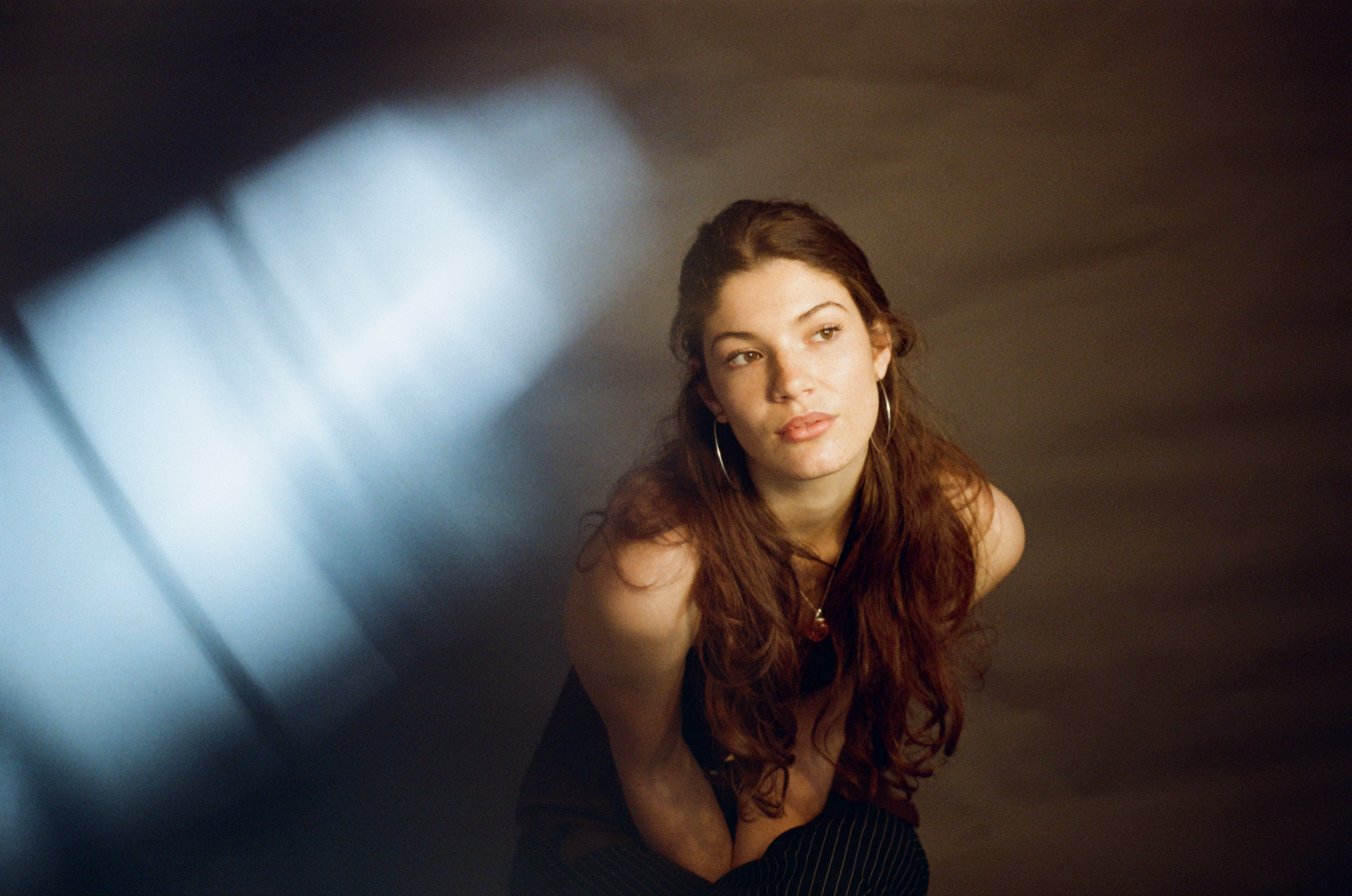

CS: I started writing songs when I was seven or eight. I took singing lessons at a place called The Rhythm Studio in West London, which is how I started playing gigs around London from an early age. I mostly sang covers, but as I got older, I started to write more and eventually began performing only originals.
RMMW: I love that you had a microphone in your hands from an early age. The transition from covers to originals is so important for artists; what inspires you to write?
CS: I used to rely on my emotions to write, which meant I was constantly waiting for bursts of inspiration. After going to uni, I realised I’d need to be producing work more regularly if I wanted to turn this into a career, so I got better at writing for the sake of writing.
I still feel really connected to the songs, but I no longer rely solely on personal experiences, and feel a lot more comfortable using my imagination to create a story. I’ve also been getting more into production as a method of songwriting, and will often experiment with that first to see if it inspires a song or some lyrics.
RMMW: It is remarkable how higher education can work through your brain to change the methodology of the manner in which you write. It is so important to understand the different aspects of production, to understand how all of the cogs fit together. That skill set will only make you a stronger writer. Hmmm, where is the weirdest place you’ve written a song?
CS: I wish I had a fun answer for this, but I really don’t think I’ve written anywhere that weird. If I’m writing alone, I like to feel safe and know I won’t be disturbed, which is usually somewhere private and quiet. If I’m writing with other people, it’s typically in a musical setting, like a studio or music room, so unfortunately nothing too crazy!
RMMW: Aww, for some people writing in a safe and quiet room is a weird place, just depends on your narrative. I typically call that level of locking in as trance mode, where you do not hear anything or see anything except what you are working on. That said, what do you think is the most difficult aspect to being a singer-songwriter?
CS: I think the thing I find hardest about being a singer-songwriter is holding myself accountable. I find starting a new idea so exciting and rewarding, but once that hyperfocus wears off, it can be really hard to return to the project without jumping to the next new thing.
It’s also easy for life to get in the way, and when you don’t have someone on your case to finish something, you end up with really promising ideas going to waste. It’s so important to show up for yourself and treat writing as not just a passion but your job too. I’ve really been working on that, but it’s sometimes hard to bridge that gap.
RMMW: It is honestly hard; there are always things that are getting in the way, and distractions consistently are coming at you. It is a practical application of writing to also treat it as a job and not something that builds on emotion or passion. Which makes me wonder: is there a favourite song written by you?
CS: I go through periods of caring more about specific songs, particularly if I’ve revisited them after a while or have reworked an arrangement with the band. Currently my two favourites are ‘Know Me Best’ and ‘Knocking Home’, because they paint the best stories.
They’re both songs about addictions and unhealthy behaviours, but from different perspectives. ‘Know Me Best’ is about getting hooked on a person that is so clearly wrong for you, and yet still hoping that underneath all the danger and excitement, you’ll be validated and recognised for who you are. ‘Knocking Home’ is about battling addiction – any addiction – and the strain it has on your relationships with family and friends. Neither of them are out yet, but I play them both at every show.
RMMW: I adore that you said, “paint my best stories”; it is important to acknowledge that visual image not just with words. Oh, you need to let me know when they are released, would be fun to review them. If someone were to press play on your device, what would be the name of the Playlist and first song?
CS: Again, I’ve tried making organised, aesthetic playlists, but that’s never really worked for me unless they’re shared playlists. I usually get obsessed with a few specific songs, add those to the top of my library, then basically listen to only those songs on repeat for a few weeks.
At the moment, the top song in my library is a bit of a rogue one: ‘Arriving Somewhere But Not Here’ by Porcupine Tree. It’s a 12-minute-long prog-rock song that my parents used to play when I was growing up. It’s one of those nostalgic songs I come back to every now and then, and it’s currently in my rotation of obsessions along with ‘No Audience’ by Absolutely and ‘H.I.M’ by SICKOFTHEINTERNET.
RMMW: Thank you for sharing that. I just stopped editing this interview to add them to my Recs playlist; I love discovering new music. I tend to get the same way, to be honest; I find that when I create a playlist, there are specific songs I will listen to more than others on repeat (an obscene number of replays on repeat). Let’s move toward the topic of performance, where has been your favourite place to perform?
CS: The most exciting place I’ve performed would have to be The Royal Albert Hall. I took part in a competition called Future Makers, which is how I got the opportunity to play one of my songs on such an iconic stage. My dad and I went to see David Gilmour there 2 years ago, and it was incredible; it’s one of my favourite venues in London, and I hope to play there again someday.
I know you asked for one, but I also want to say The Bedford in Balham; I’ve done quite a few shows there, and so far, it’s been my favourite venue for full-band sets. It’s such a beautiful space, and the sound in that room is gorgeous.
RMMW: No worries, those are two very iconic venues; I am good with you mentioning both. I find it fascinating that you mentioned one of the largest venues and a smaller one. It shows that the impact of the smaller venues has as much value. I have to admit, I love that you said that. Now are there specific subjects that you write about most frequently?
CS: A lot of my songs talk about messy, unhealthy relationships and entanglements – romantic, platonic and familial. Even when I’ve tried writing happier songs, I’ve always ended up veering them in a darker direction. I don’t really know why – I just find exploring heavier emotions more interesting.
My mum’s a counselling psychologist and so I grew up with a strong interest in psychology and analysing human behaviour. I often write about relationships through a lens of addiction and codependency – patterns I think are far more common than people care to admit. It’s so easy to get hooked on things that make us feel good, especially when they’re bad for us, and that’s something I’ve learned both through my own experiences and from the people around me.
RMMW: I am with you on that one; I have always gravitated to darker subjects within the domain of my poetry. I rarely wrote about positive subjects; I relish the pitch, however, for some reason I always have to embed a slight bit of hope in my pieces. As a Behavioural Science undergrad, I understand what you are saying about human behaviour and psychology; it is so fascinating to entwine such regardless of whether they are written in code or right to the point. Now for the most serious question, if you had a superpower, what would it be?
CS: Definitely superspeed or teleportation because I’m always rushing and running late to things. I’d also love to be able to teleport to Italy to see my family more often, or to a hot beach whenever I need a holiday.
RMMW: Superspeed would be cool, and teleportation is a favourite of mine. It would be nice to be able to poof to see loved ones living abroad.



Leave a Reply