
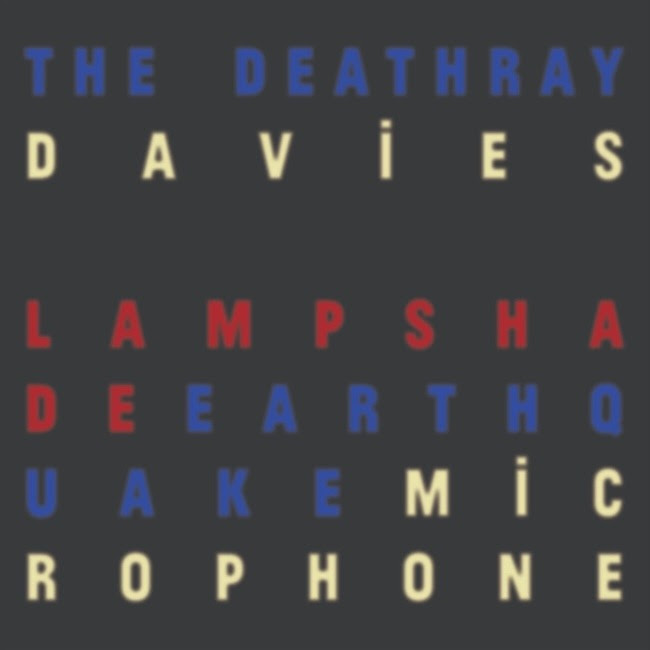
There are times when albums take a very long time to find their way into our technologically advanced digital playlist world. This album was originally recorded in 2006, shelved, and buried. Nealy 2 decades later, John Dufilho lead vocalist of DRD said that it was suggested by a long-time collaborator and founder of The Deathray Davies Jason Garner (Inky) was the catalyst to return to the recordings with fresh ears and the one thing that all artists seem to require sometimes; a little distance from their work.
Blending garage rock grit, psychedelic pop, intricate studio textures and an unmistakable sense of playful experimentation, the record is a collection of what could be described as pocket symphonies. Featuring contributions from Elephant 6 favourites Bill Doss and Robert Schneider, it’s an ambitious, wonderfully detailed body of work that has finally found its moment. Which I imagine to be the most wonderful thing ever.
RMMW: The album has quite a history, going all the way back to recording sessions in 2006 that were eventually put aside. What brought you back to that material after all these years? Was there a moment when you started listening again and realized there was something worth revisiting?
JD: It was Inky! (Jason Garner – drummer, bass player, and DRD founding member). About 2 years ago he mentioned we should go back to those sessions, crack them open, and see what they sound like. I was skeptical because after working on and off for years on them, I’d given up. They didn’t feel right and it nearly drove me crazy.
RMMW: There must be something surreal about returning to music you made almost two decades ago. When you listened to these recordings again, did they sound different to you? Did having that distance finally help you hear what you were trying to achieve back then?
JD: Yes! Thankfully when I listened again it all immediately made sense. It was freaky. Enough time had passed and suddenly I knew exactly how to find what I’d been looking for.
RMMW: “Red Lights” has such a distinctive sound, with its blend of garage rock grit, psychedelic pop and all these unexpected studio textures. Where did the song originally begin, and how did it grow into the version we hear on the album?
JD: It’s the TRASH CAN DRUMS. They’re so over the top. We actually tried to replace them a few times, but they kind of glue the whole thing together and make the song unique.
RMMW: I love that you used trash can drums! The album also has some wonderful connections to the Elephant 6 community, particularly through Bill Doss and Robert Schneider. What was it like bringing them into the project, and what did their contributions bring to the record?
JD: Bill suggested and then recorded all of the horns on the record. It really brought a few of the songs to life. He’s also singing the backup vocals on “Marbles”. He was always a natural with music, in every way. I miss him terribly, but so thankful he cared about what I was doing and had offered to help. Same with Robert. He spent an entire week with Inky and I experimenting with mixes and sorting through the endless tracks we’d recorded.
Originally this was 40 songs, and we decided to try every single idea we could possibly dream up. It was a GIANT project. When we revisited it all a few years ago, I ended up cutting it down to 27 songs. The second half is already finished and coming out next year! 🤘🏻🤘🏻🤘🏻
RMMW: 27 songs! The album has been described as a collection of “pocket symphonies,” full of unusual sounds, intricate details and studio experimentation. With so many possibilities at your fingertips, how did you decide when to keep experimenting and when to pull things back and let the songs breathe?
We gave in to the temptation and tried every single experiment possible. If you listen close, there are tricks everywhere. Part of the process 2 years ago was in bringing the energy back in and ditching anything that felt like it was just being clever for clever’s sake.
RMMW: Those types of nuances are my favourite. You recorded across several different studios, including your own home studio, Elephant Cloud. How did those different environments shape the record? And was having the freedom to mix and master at home important in finally getting the album where you wanted it?
JD: Having control over mixing at my home studio gave me the time needed to see this thing through. I’m really proud of it and thankful that it’s FINALLY seeing the light of day!!!
RMMW: Your music often finds that interesting space between catchy, melodic pop and sounds that are a little strange, unpredictable or even chaotic. Was finding that balance part of the challenge with this album? How did you know when you had gone far enough with the experimentation?
JD: In this case, there was too much weirdness originally and it was burying the pop songs underneath. I had to dig them out of all of the experiments. It all sounds pretty simple now, but these recordings were pretty confusing in the early stages. I was trying to pull away from garage rock and ended up questioning everything. In the end I think the process helped. Not that I want to go through it again haha.
RMMW: Looking back, this album has certainly taken the long road to reaching listeners. After the hiatus, the return to the old recordings and finally bringing everything together, has the experience changed how you think about creativity and timing? Is there anything you’ve learned about knowing when to let a song go?
JD: I learned mostly about listening to the song. It’ll always tell you what it wants to be.
RMMW: One last question, and a slightly different one: if you could have any superpower, what would it be?
JD: Definitely patient. Determined? I don’t know; you’d have to ask my friends 😎


Leave a Reply