
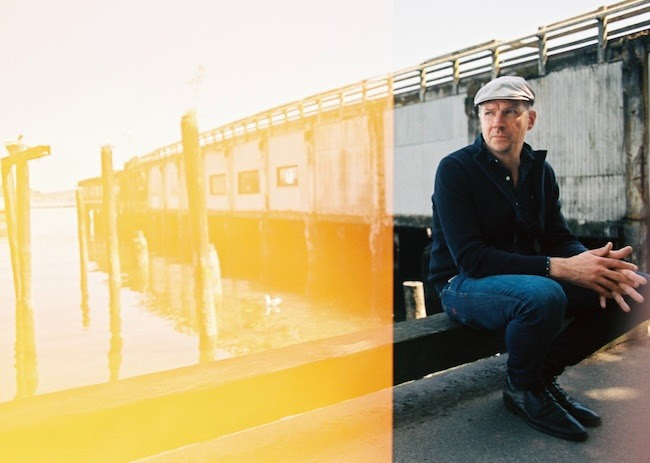
I think I will forever be obsessed with the process of a Songwriter and their narrative. It has become something that I need to know; it may seem inconsequential to the majority of individuals out there. However, to me, it is a burning desire to understand why things were written and what makes them so powerful to the team or person who wrote them. Today, I am so over the moon to share with you my interview with Kye Alfred Hillig. Once you have taken the time to read below, please follow Kye on socials here!
RMMW: You’ve described Widowmaker Express as “a wrestling match with God, a breakup letter to the universe.” How were you able to express that level of awe and pain in one album?
KAH: Whether or not I was actually able to accomplish that task, I’d have to leave to other people to determine. For me, it was looking at that struggle in as unflinching a way as I possibly could. Most people prefer not to tempt fate in regard to condemning the great powers of the universe, so there was also a bit of a perverse kink in that level of carelessness, like throwing a frisbee at an active shooter- “Over here!”. With all music, its main language is emotion, so I tried to tap into those feelings within myself and see how clearly I could translate it for others. Hopefully there’s some utility in that. My greatest wish is that it can be helpful to people who are struggling.
RMMW: I think that is one of the most important things to do in life, so to be helpful when we see someone struggling. Not everyone gets it; to have that is an immense gift. Now that said, we all have an inner critic; how do you contend with yours?
KAH: By not letting it deter my course of action. I’ve become weirdly comfortable with failure over the years, so there’s a bit of a feeling of “what are you gonna do to me?” It’s like when someone throws a rock and breaks the window of an abandoned house, like, so what? No one lives there. I have no grand aspirations outside of creating art and putting it into the world. That’s my only duty, so that critical voice is laughable in the amount of damage it’s actually able to do to me at this point.
RMMW: I think as a poet, I can relate to that so clearly with regard to the fear of failure; it is something that can be so immensely debilitating! Now, what comes first for you: the lyrics, music, verse, or title?
KAH: It can come in any of those forms, and I leave all doors open for whatever wants to wander in. I do find, however, that the best ones come to me as little snippets of words and melody while I’m doing the dishes or walking without headphones. For some reason the radio signal is stronger in those situations where I’m unoccupied. Then these marvellous little songs start swimming into my brain- tiny, naughty, little evils.
RMMW: I genuinely adore that response. You’ve previously said Harmann built “big beautiful rooms for the songs to live in.” Can you talk about some of the textures, instruments, or production choices that became especially important to the album?
KAH: We knew out of the gate that we wanted them to be haunted houses, like you could hear little ghosts or footsteps in the mix. So Harmann put a lot of energy into those details. If you listen to the record with headphones, you’ll hear tons of little spectres that aren’t even instruments or anything that helps create that feeling. I also wanted some traditional country instruments, like fiddle and lap steel, so those were always on the menu. It was also important to us that the songs were able to breathe, so a lot of the choices rotated around that desire: to create space. This was never intended to be a pop record, but instead more of an emotional experience, a bizarre dream. So we let the songs guide us in which way to treat them while pulling paint from that palette.
RMMW: The various levels of intertwined imagery throughout the body of work evoke what you previously shared. Faith appears throughout the record, but the songs don’t offer easy answers. What role does doubt play in your songwriting narrative?
KAH: A major one. The true human experience is one of unknowing and suffering, so that is the most honest place I can write from. This album and many of mine could have just as easily been titled “Ouch! Why?”
RMMW: “Ouch! Why?” That resonates with me on so many levels! After more than a decade in the Pacific Northwest music scene and ten solo albums, what still drives you to make records on your own terms?
KAH: Boredom. Mental health. Obsessiveness. Community. It can be fun and rewarding in moments, too. The fact that it’s magic- that nothing was there and now something is. I’m a proud magician pulling rabbits out of hats, you know? And just that it feels good to put things out into the world that I’m proud of.
RMMW: There’s a striking tension throughout the album between grief and the decision to keep loving anyway. Why was it important for you to include that sliver of hope through the pain?
KAH: That sliver is what we hold onto. “Well, maybe tomorrow something will be better.” Without that, like, why make an album? Why do anything? It’s important that we encourage ourselves to keep pulling up out of the darkness, to put hope into one another. Human beings are capable of so many amazing things if they choose to hang on for the ride, but many become cynical and grow a jaundiced view. There’s nowhere really to go from there, so we push forward. Keep throwing our hat in the ring.
RMMW: “Oh, Magic” opens the album with a meditation on absence, while “On Small Wings” closes it with something closer to grace. Was that emotional journey mapped out from the start of this songwriting process?
KAH: Not at all. When we were looking over what we had towards the end of the project, Daniel G. Harmann suggested “Oh Magic” as a potential opener, and after a while it just felt like the album couldn’t start any other way. That song immediately sits heavy on the chest of a listener in a way that I felt I was firing a warning shot across the bow for what was to follow. For the end of an album I find it important to drive home some sense of meaning, a message. “On Small Wings” felt like the right sentiment to send folks off on. To let a little bit of sunrise fall upon the listener, give them a place to move from.
RMMW: Thank you for that; hmmm, I wonder, if you had a superpower, what would it be?
KAH: This is going to be so cheesy, so I apologize in advance. I’d like the power to spread peace wherever I go. I’d like to aim my hands in the direction of war, have folks set down their weapons, and go to a barn dance together. That would make me very happy.
RMMW: As someone who was born in a war-torn country, there is nothing cheesy about that superpower!




Leave a Reply